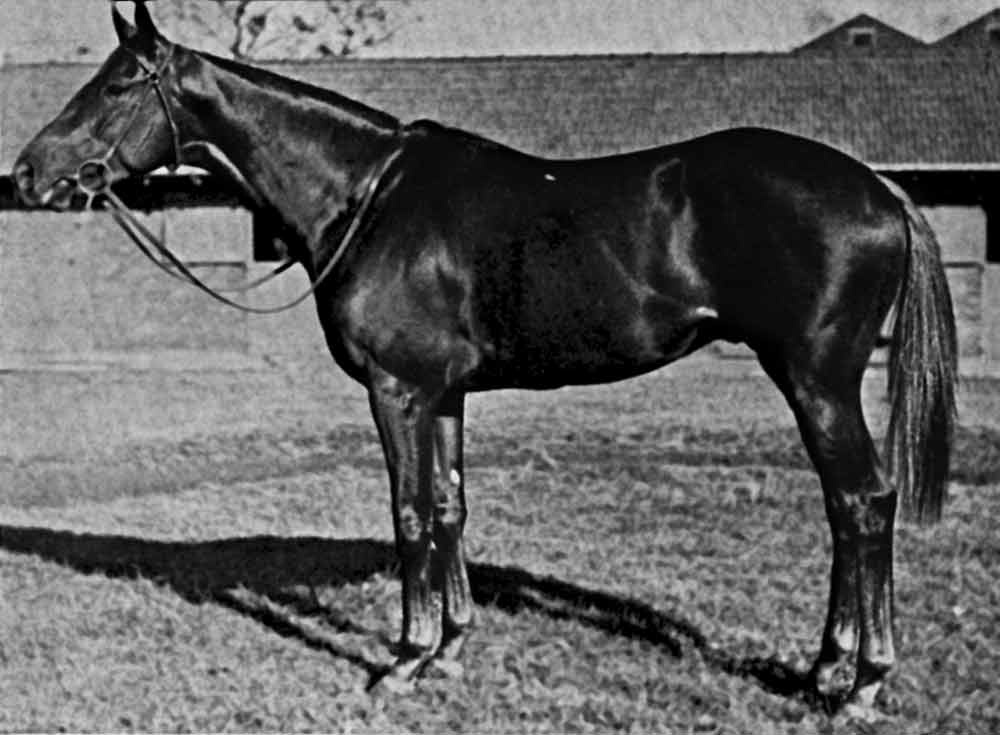
TEN BEST JULY WINNERS
1 COLORADO KING (1963)
by Mark Anthony
Rothmans sponsored the Durban July for the first time in 1963 and their association with the great race could not have asked for a more auspicious start as it was won in that year by a horse who has claims to being the best ever to race in this country.
It is, of course, impossible to make such sweeping statements with any certainty, given the problems of comparing different horses across different generations. Without actually seeing them locked in combat on the racetrack, how does one choose between, for example, Colorado King, Sea Cottage, Hawaii and Horse Chestnut? All have their devotees who believe that their particular favourite is South Africa`s greatest ever racehorse and ultimately, the matter cannot be decided conclusively.
There was never any doubt that Colorado King would be somewhere near the top of this list but the final decision to rank him as the best ever July winner, rests on the word of a man who was well qualified to render an opinion: his regular jockey, the late Robert Sivewright.
Based on a combination of career record and sheer impact on the sport, Sea Cottage is entitled to top this list, but Sivewright actually rated Colorado King higher, on the grounds that he could be placed anywhere in a race and would still effortlessly quicken when asked. Sea Cottage, on the other hand, needed to be left alone and would do things in his own time.
Trainer Syd Laird was a bit more reticent, but opined that Colorado King was at least as good as Sea Cottage at age 3.
Colorado King took a while to get off the mark, finishing second in his first three starts as a juvenile in the Cape. Once he got a taste of winning, however, he clearly relished it and reeled off four victories to round off his first season, including the Cape Nursery and the African Breeders.
Beaten in his first start at 3, Colorado King returned to the Cape and reeled off six consecutive wins. A B-Division win over 1000m was followed by an easy six-length win in the Guineas Trial and then he was up for his major test, the 1963 Cape Guineas. On the strength of his brilliant Trial win, he was sent off 6/4 favourite and duly obliged, cruising home nearly five lengths clear of Sea Rover and the top filly Majorca.
His most famous win of the Cape campaign came in the Cape Derby over 2400m, his first attempt beyond a mile. Under an inspired ride from Stanley Amos, Majorca stole a big lead and the move almost worked. Sivewright said that he did not believe he could win as Colorado King was too far back and the filly was going too well in front. But asked to make up eight lengths inside the last 400m, Colorado King produced an astonishing burst of acceleration and caught her late to win going away by a half-length. To illustrate the merit of Majorca`s performance, she finished seven lengths clear of third-placed Sea Rover, so there is little doubt that this was a race that The King won, as opposed to Majorca losing it.
Back in Durban, he was short odds to win the 1600m Clairwood June Handicap in preparation for the July, newly-sponsored by Rothmans.
Very much the current star of the SA turf, Colorado King was well-backed to win the country`s premier race. Set to carry 51kg, he would have to concede up to 6 kg to some of the older horses, but this made little difference. He did not give his supporters any anxious moments. When jockey Sivewright pressed the button, the response was instantaneous and won unextended by nearly two lengths.
Second-paced Speciality was a decent horse at his best; a Gold Cup winner, he was versatile enough to drop in distance and win a Cape Met and run second in a Queens Plate. Third placed Jerez was no slouch either. The really good horses of that era seemed comfortable over a range of distances and Jerez won the Cape Guineas, Cape Met , Gold Cup and Champion Stakes during a more than useful career, which saw him placed in three consecutive Julys and win 14 races in all.
Colorado King finished off his 3-year-old season with a more than respectable third in the Durban Merchants over 1200m, just a week after his July win. He was conceding 10kg to the winner, top sprinter Ardmore, who in his time won just about every big sprint prize in the province, including the Gilbeys Stakes [Golden Spur].
At this point, fans could look forward to more excitement the following season. Colorado King had won his races with contemptuous ease and the sky was the limit in terms of his potential at age 4.
But the South African chapter of Colorado King`s story ends here as he was exported to race in America.
Colorado King did not race at 4 and resumed his career at age 5. That first season in America yielded 7 wins of which two were at Gr 1 level and a further victory was at Gr 2. By age 6, he was no longer as good, managing a single win in 9 starts.
How does one assess Colorado King`s American exploits? He certainly must have retained some of his old ability to win at the top level there and he also showed the versatility expected of a really good horse in those days, as he won over a wide range of distances from 1300-2600m.
At his best, he was rated within 1,5 kg of Northern Dancer (who was champion 3-year-old and won the first two legs of the American Triple Crown) and some 5 kg below the top rated American older horses, Gun Bow and the legendary Kelso, so he was certainly within range of the best American horses.
On the negative side, there were too many unplaced runs for comfort, even allowing for stronger opposition that he had to face in the US. It raises the question whether he was flattered by his South African form and battled against real competition overseas.
The answer may lie in the "lost" season at age 4, as he missed what may well have been his peak year and one can only wonder whether the long layoff might have taken the edge of him when he eventually resumed racing. Also, American race schedules are punishing compared to what we are used to in SA and this is indicated by Colorado King running 17 times as a 5-year-old. Throw in the fact that he had to acclimatise to completely foreign surroundings and one can make allowances for his fading towards the end of his career.
If he could still manage a fair return of wins despite all these drawbacks, it s tempting to wonder what he might have achieved had he competed globally as horses do now, without having to endure major delays and interruptions to their careers.
Ultimately, we should simply remember Colorado King in his heyday, as one of the finest and most exciting horses ever to race in South Africa.
His successor Sea Cottage was a wonder-horse. If the man who rode them both rated Colorado King even higher, then he must have been some animal and indeed worthy to be considered the best ever July winner.
|