The Japanese racing calendar roars back into Grade 1 action this Sunday (November 16) with the 50th running of the Queen Elizabeth II Cup at Kyoto Racecourse. After a one-week pause in top-level racing, the JRA’s premier season resumes with momentum that will now continue uninterrupted through the end of the year.
This year’s Queen Elizabeth II Cup is doubly significant—it marks both the golden jubilee of a race named in honor of the late Queen Elizabeth II, who visited Japan in 1975, and the centenary celebration of Kyoto Racecourse. Over the decades, the event has grown into one of Japan’s most beloved fixtures, serving as both a showcase for elite fillies and mares and a highlight of Kyoto’s “Ladies’ Day,” now a major social occasion.
A Storied Past and Global Links
The Queen Elizabeth II Cup was inaugurated in 1976 as the final leg of Japan’s Triple Tiara for three-year-old fillies, complementing the Oka Sho (Japanese 1000 Guineas) and the Yushun Himba (Japanese Oaks). Originally staged over 2,400 meters, the race was restructured in 1996 when the Shuka Sho became the new third Tiara leg. The Queen Elizabeth II Cup was then shortened to 2,200 meters and opened to older mares.
It gained international status in 1999 and has since welcomed numerous overseas contenders. None, however, have made a greater impression than Britain’s Snow Fairy, who swept back-to-back victories in 2010 and 2011 under Ryan Moore—a feat that solidified the race’s international prestige.
Although four foreign-trained horses were nominated this year, none will make the journey to Kyoto, leaving a strong domestic field of 19 nominees vying for 18 starting spots. The winner will collect ¥130 million (approximately US$850,000).
Race Trends and Key Insights
Recent history suggests that punters should tread carefully. Only two favorites have triumphed in the past decade, with Brede Weg (2023) being the most recent—and notably, the last 3-year-old to win. Four-year-olds have dominated during that span, accounting for six victories, and horses trained at the nearby Ritto Training Center have been especially successful, likely benefitting from minimal travel stress.
Cristian Demuro’s record-breaking ride aboard Stunning Rose last year (2:11.1) set a new benchmark for the race, breaking a 23-year-old record.
Horses to Watch
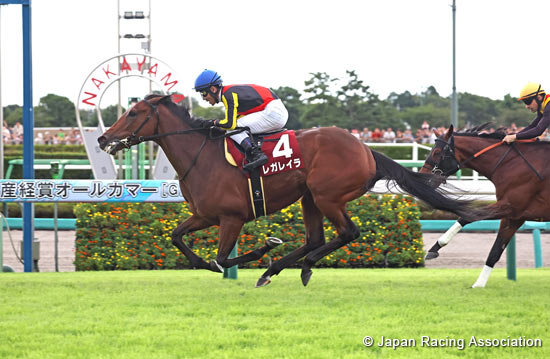
Regaleira – The Arima Kinen heroine returned to form this autumn with victory in the Grade 2 Sankei Sho All Comers after a subdued Takarazuka Kinen effort. Trainer Yu Ota reports the mare is thriving after a freshening, though Kyoto remains a question mark after finishing fifth here last year.
Erika Express – The three-year-old Epiphaneia filly was agonizingly close in the Shuka Sho, just denied in the final strides. Yutaka Take, chasing his 85th JRA Grade 1 win, retains the ride, confident the Kyoto course suits her forward-going style.
Stellenbosch – Winner of the 2024 Oka Sho, she has been consistent if not spectacular since, often placing at the top level. Trainer Sakae Kunieda hopes a fresh start at Ritto will spark a rebound after a lackluster run in the Sapporo Kinen.
Paradis Reine – Fourth in the Yushun Himba and a fast-finishing third in the Shuka Sho, she appears to be peaking at the right time. Her late turn of foot could prove potent on Kyoto’s long outer stretch.
Coconuts Brown – Lightly raced for a five-year-old, she finished second in the Grade 2 Sapporo Kinen and seems ready for her first top-level test. Her trainer, Hiroyuki Uemura, holds a strong win rate and believes she has matured into a true Grade 1 contender.
Kana Tape – A seasoned mare trained by Noriyuki Hori, she comes off a solid third in the Ireland Trophy and continues to show consistency. Damian Lane reunites with her, bringing confidence after an encouraging recent workout.
Vermicelles – The Gold Ship mare nearly shocked in the Kyoto Daishoten last month, staying on gamely for third. Her stamina could make her dangerous if the pace is strong.
Shinryokuka – A veteran of this race, finishing ninth and fourth in the last two editions, she has the experience to surprise. Her trainer, Masahiro Takeuchi, has tailored her campaign specifically for this target.
The Stage Is Set
Post time for the Queen Elizabeth II Cup is 15:40 (Japan time), the 11th of 12 races on Kyoto’s Sunday card. As the curtain rises on the Japan Autumn International Series—culminating later this month in the Japan Cup—the spotlight once again falls on Kyoto, where history, heritage, and horsemanship will intertwine to celebrate 50 years of a race fit for a queen.
|