Over the past nine seasons, South African racing has undergone a clear and measurable contraction. Fewer racecourses, fewer meetings, fewer races, and—most critically—a steadily shrinking horse population. Yet amid that broad decline, one signal cuts against the grain: the Cape Met has not only retained its elite status, but in relative terms, has become more exclusive.
The raw numbers underline the scale of the shift. In 2016/17, South Africa had 6,697 horses in training. By 2024/25, that number had fallen to 4,433, a decline of more than a third. Every season in between recorded a year-on-year decrease, with no meaningful recovery point. This is not a temporary correction but a long-term structural trend.
Set against that contraction, the Cape Met tells a different story.
Cape Met concentration versus the national horse population
| Category |
16/17 |
17/18 |
18/19 |
19/20 |
20/21 |
21/22 |
22/23 |
23/24 |
24/25 |
| Number of Horses |
6,697 |
6,479 |
6,194 |
5,760 |
5,645 |
4,956 |
4,726 |
4,569 |
4,433 |
| YoY Change – Horses |
— |
-218 |
-285 |
-434 |
-115 |
-689 |
-230 |
-157 |
-136 |
| Cape Met Runners |
15 |
18 |
13 |
13 |
11 |
11 |
19 |
11 |
16 |
| YoY Change – Cape Met Runners |
— |
+3 |
-5 |
0 |
-2 |
0 |
+8 |
-8 |
+5 |
| % Horses in Cape Met |
0.22% |
0.28% |
0.21% |
0.23% |
0.19% |
0.22% |
0.40% |
0.24% |
0.36% |
| YoY Change – % Horses (pp) |
— |
+0.06 |
-0.07 |
+0.02 |
-0.04 |
+0.03 |
+0.18 |
-0.16 |
+0.12 |
What emerges is a clear divergence between the shrinking base and the sport’s most prestigious event. While the national horse population declines steadily, Cape Met field sizes fluctuate rather than trend downward. The standout season is 2022/23, when 19 runners lined up for the race—its largest field in this period—despite the overall horse population being close to its lowest point.
That year also produced the highest concentration figure in the dataset. Cape Met runners accounted for 0.40% of all horses in training, nearly double the level seen in several surrounding seasons. The year-on-year movements show that these percentage swings are driven almost entirely by changes in field size, not by shifts in the national horse population.
This distinction matters. It suggests that elite racing is not simply being carried along by broader industry decline. Instead, top-level races like the Cape Met are consolidating their position, attracting a stable—or even growing—share of the best horses available, even as the overall pool shrinks.
In a reduced ecosystem, prestige becomes more concentrated. Owners and trainers with quality stock target fewer, higher-value opportunities. The Cape Met, with its history, prize money, and international profile, remains firmly at the top of that pyramid.
That resilience should not mask the wider challenges facing South African racing. A contracting horse population raises unavoidable questions about depth, sustainability, and long-term growth. But the data makes one thing clear: the health of elite racing and the health of the broader industry are related, yet not identical. The Cape Met continues to stand as a concentrated expression of quality at a time when the base beneath it is narrowing.
Note that the 2026 Cape Met is not included due to the fact that no horse population numbers are available at present.
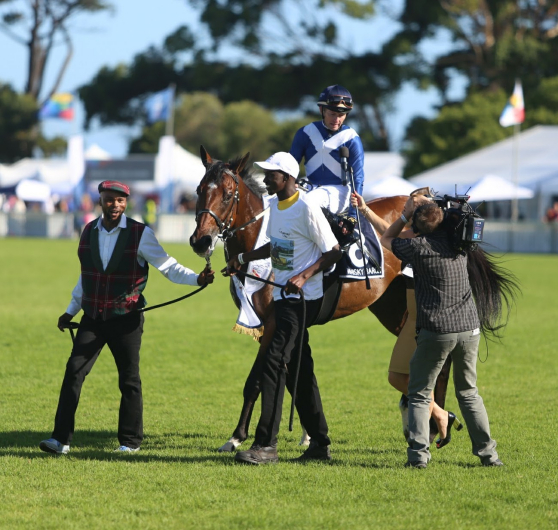
Image Whisky Baron 2017 Cape Met
|