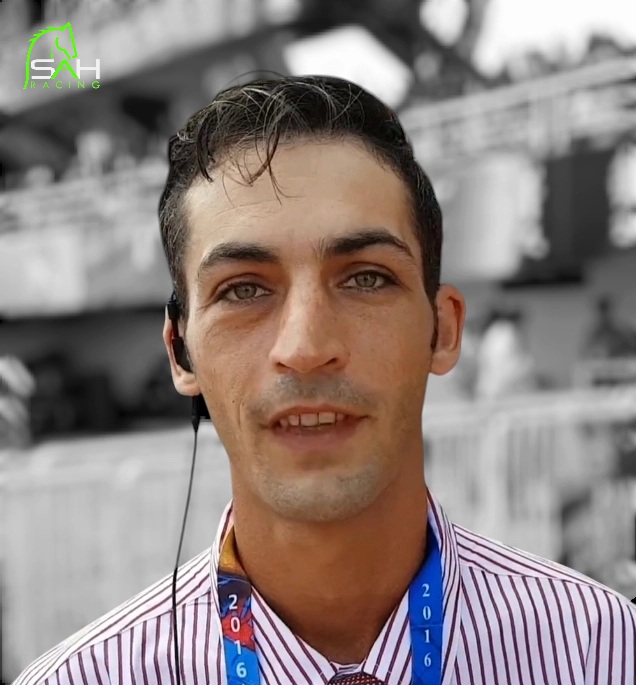
Jarred Coetzee’s next move in racing doesn’t come with fanfare or a ready-made stable of stars. Instead, it begins in the most traditional way — with one horse, a handful of boxes, and the quiet belief that experience earned the hard way will eventually count for something.
This week at Ipswich, the South African-born horseman sends out his first runner under his own name, marking a decisive shift after years spent working within some of Australia’s most respected operations. The horse is Gas Brigade, a maiden still searching for a breakthrough, but the significance lies less in the runner and more in what it represents: Coetzee stepping out from behind the scenes.
His grounding in racing runs deep. Introduced to the game by his father Kevin, a trainer himself, Coetzee developed his understanding of horses from the ground up. The family’s racing lineage extends further through his uncle, Felix Coetzee, whose decorated career in Hong Kong placed the name on an international platform.
Jarred’s own journey has followed a similarly global path. He has worked across multiple jurisdictions, gaining experience in Hong Kong, China, and Australia, and learning under a range of trainers with different systems and philosophies. Time spent with Chris Waller and Henry Dwyer added further layers to his education, but it was his role alongside Robert Heathcote in Brisbane that shaped his profile most clearly.
At Eagle Farm, Coetzee operated as Heathcote’s second-in-charge, entrusted with significant responsibility in a stable that handled high-class performers such as Rothfire, Startantes and Abounding. It was a role that offered both exposure and insight into what it takes to compete at the top level.
There was a stage where a long-term partnership appeared a natural progression, but the decision was ultimately made to pursue an independent route — a choice that reflects both ambition and a willingness to accept the uncertainty that comes with it.
Coetzee now begins that journey from a modest base, operating out of facilities provided by Lawrie Mayfield-Smith. It is a practical starting point, but one that places the full weight of responsibility on his shoulders, from managing horses and staff to navigating the commercial realities of the sport.
Gas Brigade, his first representative, arrives with a record that suggests ability without reward. The four-year-old has shown glimpses of promise without converting them into a win, and now becomes the foundation of a stable still in its infancy. The assignment at Ipswich over 1666 metres offers a first opportunity to begin building momentum, however gradual that process may be.
Industry observers often point out that the transition from senior stable role to independent trainer is one of the most demanding shifts in racing. Success is no longer tied solely to horsemanship, but to management, decision-making, and the ability to build relationships with owners and riders. Coetzee enters this phase with the advantage of having operated in a leadership capacity before, but the challenge now is translating that into sustained results under his own banner.
For South African racing followers, his move adds to a growing list of horsemen exporting their skills internationally, carrying with them a reputation for resilience and adaptability. Coetzee’s varied background suggests he is well equipped for the task, but as always in racing, progress will be measured in outcomes rather than potential.
The early stages are unlikely to be defined by immediate success. Instead, they will revolve around steady development, incremental gains, and the gradual expansion of a stable still finding its feet.
For Jarred Coetzee, the shift is clear. After years of contributing to the success of others, the results that follow from here will belong entirely to him.
|