Nakayama Racecourse once again takes the spotlight on Sunday, Dec. 28, when the Arima Kinen (G1) closes out the Japanese racing year in the way fans know best—big names, big money, and a race shaped as much by public passion as raw form.
With the Hopeful Stakes run the day before, the 70th renewal of the Arima Kinen reclaims its traditional position as the final major statement of the season. Sixteen runners will be selected from 22 nominees for the 2,500-meter turf test, a race that offers a first prize of JPY500 million and total stakes of JPY1.09 billion, matching the Japan Cup for overall value.
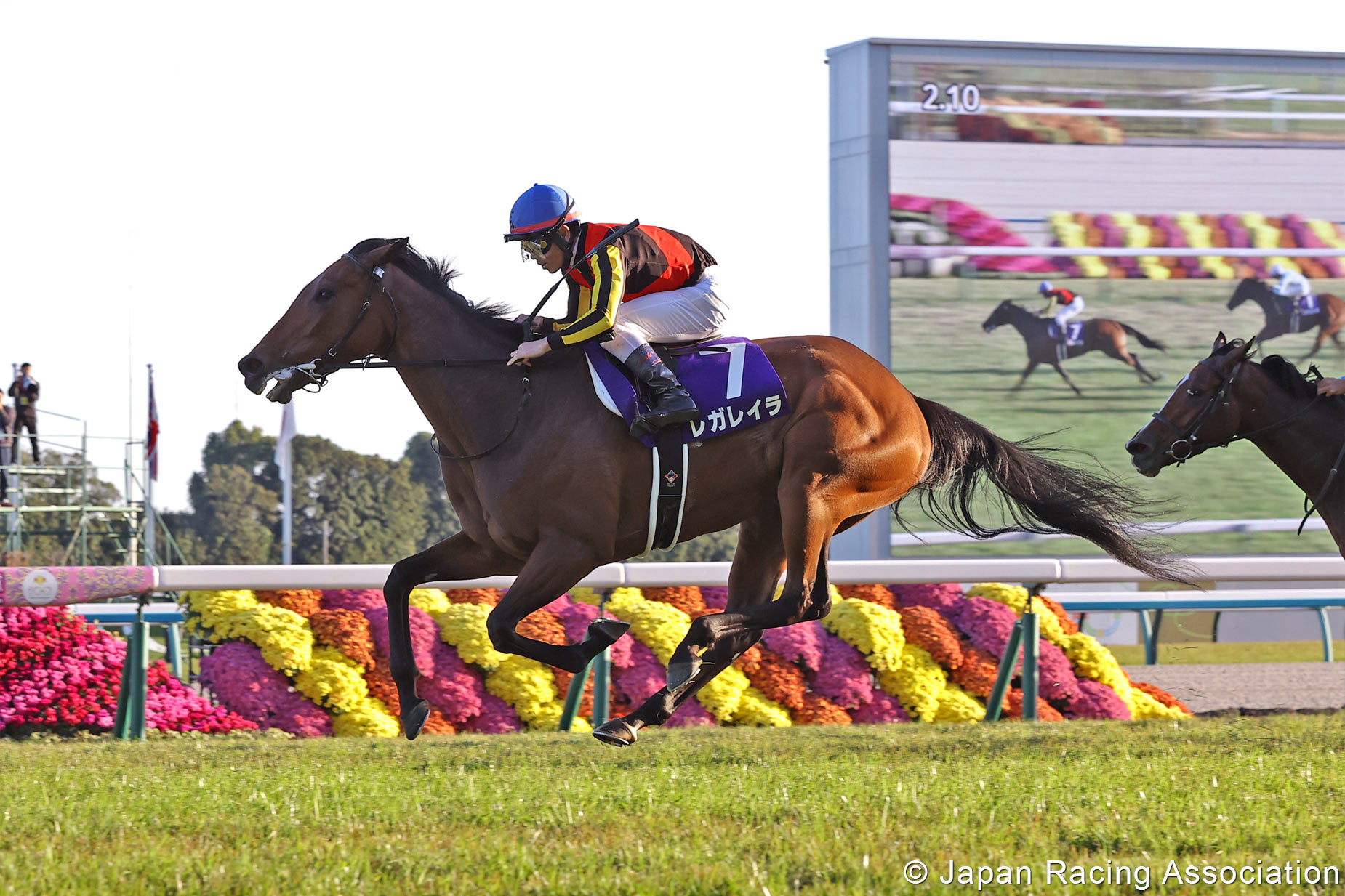
What separates the Arima Kinen from every other elite race in the country is the ballot box. Fans vote horses into the field, and this year their message was unmistakable. Defending champion Regaleira topped the poll with more than 612,700 votes—more than triple the support she received a year ago. Five other horses from the fan-voted top 10 are also among the nominees, underscoring the race’s unique bond with the public.
Run over Nakayama’s inner course, the Arima Kinen is a relentless examination of balance, stamina, and tactical nerve. The start comes near the end of the backstretch, forcing riders to make immediate decisions for position. Two laps, constant undulations, and a steep final rise in the homestretch mean there is nowhere to hide. Wide draws are a known handicap, one reason the field is capped at 16.
Three-year-olds and up are eligible, including geldings. The younger generation—two colts and two fillies expected this year—will carry 56kg, while older runners shoulder 58kg. Post time is set for 15:40 local time as race 11 on a 12-race card.
The Headliners
Regaleira enters with momentum and history within reach. The Suave Richard mare recently captured the Queen Elizabeth II Cup, adding a third Grade 1 to a résumé that includes the 2023 Hopeful Stakes and last year’s Arima Kinen. That victory made her the first three-year-old filly in 64 years to win the race. A repeat would place her among only four horses to win the Arima Kinen in consecutive years—and she would be the first filly or mare to do so. Christophe Lemaire is expected to take the ride.
Danon Decile, the Epiphaneia colt, has been a model of consistency. A winner of the Japanese Derby and the Dubai Sheema Classic, he has missed the board only once in his career. Third in this race last year, he comes off a demanding international campaign highlighted by a hard-fought Japan Cup. Keita Tosaki is expected to be aboard.
Museum Mile, this year’s Satsuki Sho winner, represents the new generation. By Leontes, he has already proven himself at the top level and arrives fresh after skipping the final Triple Crown leg. Sunday’s contest will be the longest race of his career, but his Nakayama win in the St. Lite Kinen suggests the track will suit.
Meisho Tabaru finally broke through at the elite level when wiring the Takarazuka Kinen earlier this year. The Gold Ship colt is a natural front-runner, and his stamina will be tested as he attempts to emulate his sire by landing the Arima Kinen.
Justin Palace, now six, makes his fourth and final appearance in the Arima Kinen. A Tenno Sho (Spring) winner and consistent Grade 1 performer, this race will serve as his retirement run. Taisei Danno is expected to retain the mount.
Shin Emperor has been a global traveler, contesting elite races in Japan, Europe, and the Middle East. Tough and genuine, the Siyouni colt finally secured an overseas win earlier this year but still seeks a defining domestic triumph.
Others to Watch
Admire Terra brings proven stamina after winning the 2,500-meter Meguro Kinen and has finished on the board in every completed start of his career.
Tastiera, a Queen Elizabeth II Cup winner in Hong Kong, has endured troubled runs this autumn. With a smoother passage, improvement is expected.
As always, the Arima Kinen is more than a race. It is a farewell for some, a final reckoning for others, and a moment when fans help decide how the year will end.
|






.jpg)