A leaked report prepared for the TAB New Zealand Racing Advisory Committee has raised concerns about the long-term financial sustainability of New Zealand's racing industry, warning of a structural deficit exceeding NZ$50 million annually and forecasting that available cash reserves could be exhausted by the end of the 2027/28 racing season if no further action is taken.
According to reporting by the National Business Review (NBR), the advisory committee's assessment concluded that the industry is facing what it described as "reinforcing loops of decay" that threaten its long-term viability.
The findings have emerged despite significant financial support flowing into the industry through TAB New Zealand's partnership with global wagering operator Entain.
Focus Turns To 2028 Entain Funding Deadline
The concerns outlined in the advisory committee report are centered on what happens after 2028, when Entain's guaranteed minimum funding arrangements come to an end.
According to reporting by The Straight, the committee warned that industry distributions are expected to decline once the guaranteed payments expire and funding reverts to a revenue-sharing model.
The Entain partnership was announced in 2023 following legislation that enabled TAB New Zealand to enter into a long-term strategic arrangement with the betting operator. The deal included guaranteed funding levels designed to provide certainty to racing and sporting bodies during the initial years of the agreement.
The advisory committee's concern is that current industry spending levels may not be sustainable once those guarantees cease.
Declining Foal Numbers Highlight Supply Challenges
The report also identified declining horse numbers as a major long-term concern.
Figures reported by the New Zealand Herald show that thoroughbred foal numbers have fallen by approximately 22 percent over the past decade. The same report noted that around 500 breeders have exited the industry since 2015.
Industry participants have warned that declining breeding numbers could eventually affect horse populations available for racing, creating challenges for field sizes and race programming.
The Straight separately reported concerns that falling horse numbers may place further pressure on race fields and wagering performance in future years.
Administrative Costs Under Scrutiny
Another issue highlighted by the advisory committee was the industry's administrative expenditure.
According to the New Zealand Herald, the report estimated annual administrative costs at approximately NZ$91 million and suggested consideration be given to governance reform and greater coordination between racing codes.
The report's recommendations included examining whether efficiencies could be achieved through a more streamlined administrative structure.
Calendar Changes Already Underway
The industry's racing calendar has already undergone significant restructuring.
Trackside reported that the 2026/27 racing calendar will comprise 587 meetings and 5,101 races. The reduction from the previous season is largely attributable to the closure of New Zealand's greyhound racing industry, which had contributed more than 400 meetings annually.
Trackside also reported that the harness racing sector has begun restructuring race programming in an effort to improve field sizes and better align racing opportunities with available horse populations.
Project Stamina Targets Long-Term Infrastructure Planning
In response to broader industry challenges, New Zealand Thoroughbred Racing (NZTR) and Harness Racing New Zealand (HRNZ) have launched a joint infrastructure review known as Project Stamina.
According to Racing News, the initiative is designed to move both codes from a model of reactive infrastructure maintenance toward long-term strategic investment planning.
The project is expected to deliver recommendations later in 2026.
Speaking in updates published by Harnesslink, NZTR Chief Executive Matt Ballesty said the industry needed a coordinated approach to long-term planning and investment decisions.
Ageing Demographics Present Additional Challenge
Beyond financial and operational concerns, the advisory committee report also highlighted demographic pressures.
According to the New Zealand Herald, the report found that racing participants and customers are ageing, while engagement among younger audiences remains limited.
The committee warned that weaker youth participation could have implications for future wagering activity and industry growth.
Industry Debate Continues
The leaked report has prompted considerable discussion across New Zealand racing.
The Straight reported that NZTR disputed aspects of the narrative surrounding the report and stressed that industry stakeholders share a common objective of securing a sustainable future for racing.
While opinions differ on the best path forward, the figures contained in the advisory committee's assessment have intensified debate about how the industry should prepare for the period beyond 2028, when Entain's guaranteed funding arrangements expire.
The advisory committee's findings suggest that decisions taken over the next several years may play a significant role in determining how the industry adapts to declining horse numbers, demographic change and future funding challenges.
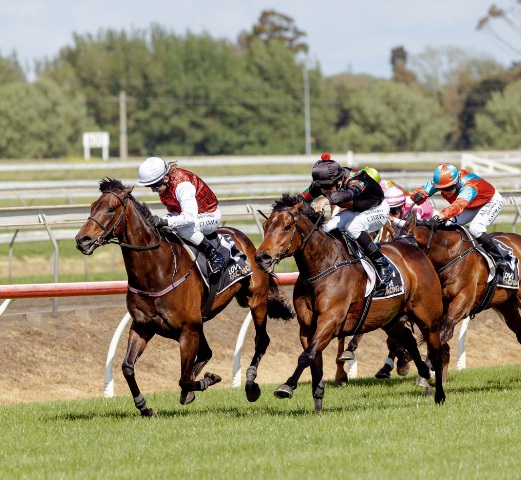
Image: NZ Racing Love Racing
|




.jpg)