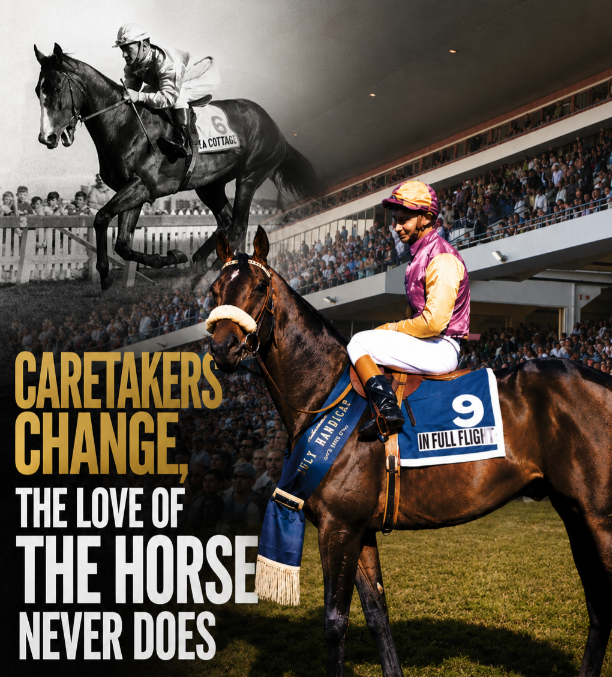
There is an important distinction every racing enthusiast should remember: the caretakers of the sport are not the sport itself.
Administrators come and go. Boards change. Companies rise and fall. Ownership structures evolve. Business models are rewritten. Yet through every era, one constant has remained—the thoroughbred. The horse has always been the heart of racing, regardless of who happened to occupy the boardroom.
South African horse racing has survived more than a century of change. It has weathered wars, economic depressions, political transformation, shifting gambling landscapes, technological revolutions, corporate collapses and endless governance disputes. Through it all, the sport has endured because its foundations were never built solely on those entrusted to manage it.
More Than a Business
Few regions illustrate this better than KwaZulu-Natal and the Western Cape.
Both boast some of the richest traditions in South African racing, producing legendary horses, trainers, jockeys and unforgettable race meetings. Their histories have not always followed the same path. They have operated under different ownership structures, different financial models and different leadership philosophies. Yet each generation has inherited the same responsibility—to preserve and strengthen the sport for those who follow.
That responsibility extends far beyond balancing books or negotiating commercial deals. Racing's custodians are merely temporary caretakers of an institution that existed long before them and, if properly protected, will continue long after they have gone.
Generations of Caretakers
Over the decades, those caretakers have come from every corner of society. Some began as ordinary racing members who dedicated their lives to the game. Others were among the country's most influential business leaders who invested enormous resources into developing the industry. There were visionaries who modernised the sport, administrators who built lasting institutions and individuals whose commitment ensured racing remained relevant during difficult periods.
Unfortunately, history also records darker chapters. South African racing has not escaped poor governance, financial mismanagement, corporate failures and individuals whose interests lay more in personal gain than the long-term health of the industry. Some of the country's most notorious corporate figures found themselves intertwined with racing's administration, leaving consequences that are still felt today.
The collapse of long-standing structures, the financial demise of former operators, disputes between stakeholders and the continual restructuring of the industry have tested confidence throughout the sport. More recently, racing has witnessed increasing fragmentation, public disputes and decisions that have often appeared driven more by self-preservation than by collective progress.
Perhaps most concerning is that, despite unprecedented access to technology, data and global best practice, the overall standard of leadership across significant parts of the industry has arguably never appeared more inconsistent. Too often, protecting positions seems to take precedence over protecting the sport itself.
The Horse Never Changed
That is a tragedy.
But it should never become an excuse to abandon racing.
Because horse racing has never belonged to administrators alone.
It belongs to the owners who continue to invest despite uncertainty. It belongs to breeders who dedicate decades to bloodlines. It belongs to trainers and stable staff who rise before dawn every morning. It belongs to jockeys who risk everything in pursuit of victory. It belongs to punters, photographers, journalists, racegoers and countless volunteers who keep the culture of racing alive.
Above all, it belongs to the horse.
The thoroughbred neither knows nor cares who sits in the boardroom. It asks only to run. Every great champion—from generations past to those still to come—serves as a reminder of why so many people fell in love with this sport in the first place.
Never Confuse the Caretakers with the Sport
Caretakers will always change. Some will leave the sport stronger than they found it. Others may leave it weaker. That cycle has repeated itself throughout South African racing's history and will undoubtedly continue.
The mistake is allowing disappointment with those temporarily entrusted to manage the sport to destroy one's passion for the sport itself.
Criticise poor leadership where it deserves criticism. Demand accountability. Expect competence. Hold administrators to the highest standards.
But never confuse the custodians with the game they have been asked to protect.
Because when today's caretakers are gone, the horses will still walk into the parade ring, the starter will still press the button, and another generation will discover the magic that has captivated South Africans for well over a century.
Never allow the caretakers of the sport to make you lose the sport—or your love for it.
|










.jpg)