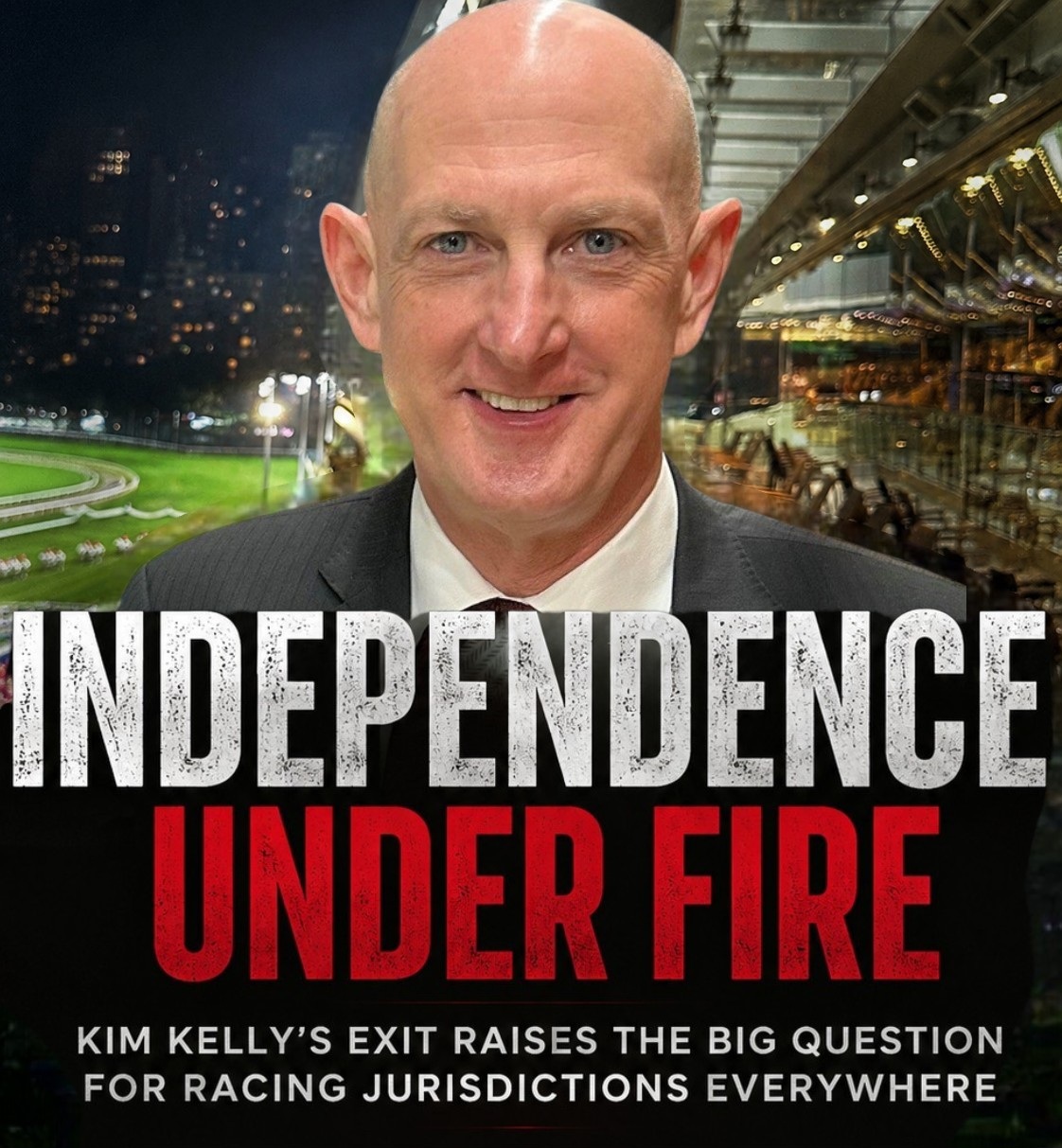
Kim Kelly's resignation as Deputy Commissioner of the Queensland Racing Integrity Commission has significance well beyond Australia. While the circumstances surrounding Queensland's proposed integrity reforms are distinct from those in South Africa, the principle at the centre of his departure is one that has already generated considerable debate around the National Horseracing Authority of Southern Africa: how independent can a regulator remain when the boundaries between regulation and the commercial interests it oversees begin to narrow?
Kelly, one of international racing's most experienced integrity officials, has made his position clear. His concerns centre on the proposed restructuring of Queensland racing integrity following recommendations from The Next Lap review and, specifically, the prospect of certain integrity functions becoming more closely connected to Racing Queensland.
Explaining his concerns, Kelly identified dependency between regulators and commercial bodies as a potential threat to genuine independence.
"I think wherever there's some sort of dependency on a commercial body by a regulatory body, I think it blurs the lines of independence," Kelly said when speaking to Racenet.
That observation has particular relevance to the governance debate that unfolded in South African racing during 2025.
Different Structures, Similar Questions
The NHA underwent a major constitutional restructuring in November 2025 when its members overwhelmingly approved the replacement of the organisation's constitution. The changes followed months of discussion over the regulator's future governance and its relationship with the wider racing industry.
The Queensland and South African situations should not be treated as identical, and Kelly's resignation is not commentary on the NHA. The common thread is instead a broader regulatory question: where should racing draw the boundary between organisations pursuing commercial objectives and the authority responsible for policing the industry?
Before the NHA's constitutional changes were adopted, concerns were publicly expressed that elements of the proposed structure could diminish its independence and regulatory authority.
A key point of contention involved the licensing and regulation of racing operators. Critics argued that the proposed changes would reduce the NHA's capacity to take action against an operator found to have breached its licence conditions or the Rules of Racing.
Former NHA Chairperson Susan Rowett was among those who publicly challenged the reforms, contending that weakening the regulator's powers over operators could compromise its ability to operate as an effective independent authority.
The NHA's position was different. In its published rationale for the amendments, the organisation argued that reforms to the appointment process were designed to address a circular governance structure under which the existing Board exercised significant influence over its future composition. According to the NHA, the revised mechanism would create a more transparent, objective and independent appointments process.
That distinction is central to any comparison between the two jurisdictions. The structures and circumstances differ, but the debate ultimately returns to the same principle: the degree of separation required between racing's commercial and regulatory functions.
Independence Must Be More Than Structural
Racing regulators are required to enforce rules, investigate breaches and make decisions that can conflict with the interests of influential participants and commercial organisations. Their purpose is fundamentally different from that of businesses tasked with increasing turnover, growing wagering revenue, attracting customers and developing the racing product.
Those competing responsibilities will inevitably create tension. The critical issue is whether the regulator retains sufficient structural and financial independence to make decisions without commercial considerations influencing its mandate.
Even where no interference occurs, the perception of dependency can become a problem in itself. Confidence in regulation rests not only on independence being exercised, but also on participants and the wider public believing that it exists.
Kelly's position on that point appears unequivocal. Speaking about the competitive Australian wagering environment, he underlined why independence remains fundamental to his approach to integrity.
"I've got very strong thoughts and values as far as independence goes, particularly here in the Queensland and the Australian environment, where there's so much competition for the gambling dollar and for the hearts and minds of the public," he said.
For South African racing, the relevance lies in the principle rather than the specifics of Queensland's proposed structure.
The South African industry has undergone substantial commercial restructuring in recent years. Within that environment, the NHA's independence carries particular importance. To retain regulatory credibility, it must have both the authority and the perceived freedom to regulate all participants without fear or favour.
The question, therefore, extends beyond constitutional wording or organisational structures. It is about how much direct or indirect influence commercial racing interests should have over the funding, appointments, governance or functioning of the authority charged with regulating them.
It also raises a more difficult question: at what point does necessary cooperation between regulator and operator become dependency?
Kelly Draws His Line
For Kelly, the answer has resulted in his departure.
"The direction that Queensland racing is going in doesn't quite align with my values and my principles," he said, before adding: "And therefore, it's best for me to stand aside."
His decision carries additional weight given a career that included serving as Chief Stipendiary Steward in Hong Kong, one of international racing's most respected jurisdictions.
South Africa has already conducted an extensive debate over the future governance and independence of its own regulator. The new NHA constitution was overwhelmingly approved by members in November 2025 and took immediate effect. That vote settled the constitutional process, but it did not make the wider principle of regulatory independence irrelevant.
Kelly's departure in Queensland provides another reminder of why the issue remains central to racing governance.
Modern racing is increasingly shaped by the demands of a highly competitive wagering market. Commercial operators require the capacity to innovate, compete and expand the racing product. An integrity regulator has a different responsibility. Its authority depends on being able to make decisions independently of those commercial priorities.
Queensland and South Africa have reached this discussion through different circumstances and different governance models. Yet the fundamental question confronting both is recognisable: can a racing regulator remain genuinely independent if the lines separating it from the industry's commercial interests become progressively less distinct?
Kim Kelly has now answered that question for himself. For racing jurisdictions elsewhere, the debate is far from settled.
|


.jpg)





.jpg)
.jpg)