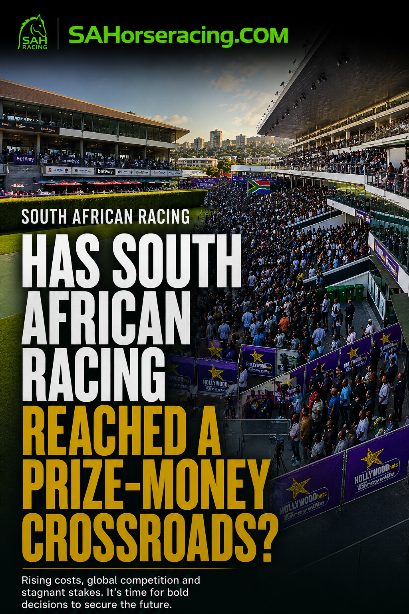
The introduction of a R10 million purse for the Durban July and the current R6m stake for the Summer Cup was intended to reinforce the country's premier handicap races as the pinnacle of South African racing. Instead, it has ignited a broader debate about whether concentrating prize-money at the very top delivers the greatest benefit to the industry. With several leading horses instead targeting the Champions Cup, the discussion has shifted beyond the Durban July itself to whether racing's financial resources are being allocated where they can have the greatest long-term impact. The argument was brought up by SAHorseracing in this article last year.
The argument in favour of maintaining—or even increasing—the Durban July stake remains straightforward. As South Africa's flagship race, it is expected to offer prize-money that reflects its stature. A lucrative purse enhances prestige, strengthens international perception, and provides owners with an opportunity to compete for one of the richest prizes in the southern hemisphere.
Supporters also contend that major races require major investment. The Durban July remains the sport's biggest shop window, attracting the greatest public attention, media exposure and commercial interest. From that perspective, maintaining a record stake is viewed as an investment in the industry's flagship event.
However, this year's outcome has prompted an important question. If a R10 million purse was unable to secure what many regarded as the strongest possible field, can further increases in prize-money alone be expected to achieve that objective?
The discussion extends beyond the value of the purse itself. Race conditions, handicapping, programme planning and campaign decisions all influence where elite horses compete. The latest renewal suggests prize-money is only one factor in those decisions.
A Different Approach
An alternative proposal has gained considerable support within sections of the industry. Rather than directing additional millions towards a single elite race, the suggestion is to redistribute approximately R5 million increase or find funding to increase maiden racing by creating a certain number of "Super Maidens" worth R100,000 each above their current value.
The concept shifts the focus from rewarding a handful of elite performers to supporting the widest possible ownership base. Every owner begins with maidens, making those races the foundation of the industry rather than its showcase. The results are increased ability to attract owners and also attract owners who are willing to wait for more stout predigreed runners to come to hand.
Under such a model, smaller owners would have greater opportunities to recover training costs, trainers with modest strings would compete for more meaningful returns, breeders could benefit from stronger demand for young stock, and ownership may become more financially sustainable across a broader section of the sport.
Perhaps most notably, when the proposal was discussed with owners, trainers, breeders and other participants, support was described as being close to unanimous. While not a scientific survey, the response suggests many participants believe strengthening the grassroots would deliver greater long-term value than further increasing the prize-money of an already well-funded feature race.
Top Down Or Bottom Up?
The debate ultimately centres on two contrasting philosophies.
One argues that a strong flagship race elevates the entire industry. The other contends that sustainable growth comes from strengthening the foundation first, allowing success to build upwards through increased ownership and broader participation.
The broader concerns raised throughout South African racing add another dimension to the discussion. Many participants acknowledge the substantial investment flowing into the sport but question whether that investment is sufficiently reaching the everyday owner who forms the backbone of the racing population.
The proposal for enhanced maiden races reflects that sentiment. Rather than concentrating additional funds among a relatively small group of elite competitors, it seeks to spread opportunity across a much larger segment of the industry.
Finding The Balance
The two positions are not necessarily incompatible.
Retaining the Durban July's R10 million purse or the Summer Cup's R6m would preserve its standing as South Africa's premier races while allowing future increases in prize-money to be directed towards lower-grade races and maiden events. Such an approach would maintain the prestige of the country's flagship while broadening the financial support available throughout the racing calendar.
The debate is no longer simply about the value of one race. It has become a discussion about the future direction of South African racing and whether investment should continue flowing primarily to the top end of the sport or be distributed more widely among the owners, trainers and breeders who sustain the industry year-round. How those decisions are made may shape the sport for many years to come.
Also read this article regarding where the current prize money funding has come from.
|



.jpg)




.jpg)
.jpg)